
Downwind Wine: Issue #6
Common goals, emotion and language, Samhain, family history, and the Muppets
After the Race
This is one of the reasons I love the Wednesday night races.

Building Synergy: Common Goals
I am using this newsletter as an opportunity to think out loud on some of my writing projects. As I update this classic model of synergy, here’s one thing I’ve been noodling on.
I introduced the first ingredient in synergy, requisite variety, in DWW #3. A range of perspectives can be a blessing or a curse. People are more likely to pay attention to different ideas when they share a common goal with the others involved. Establishing a common goal is rarely as easy as it sounds.
Here are some of the tools we can use to orchestrate common goals:
Ends before means
Whenever I set a goal, I often also have an idea about the best way to get there (means). If someone else has a different idea about the best approach, we can get caught up in disagreement without noticing that we are focused on the same outcome (ends). Taking the time to step back and see if we can agree on the result we want, while suspending judgment about the best way to get there, is a starting point.
One example that comes to mind is the question of remote work vs. returning to the office. Some people believe that in-person interaction is essential for culture, collaboration, and learning. Others highlight flexibility and autonomy as key to productivity and well-being. If we can step back and recognize a shared desire to create workplaces where people can feel connected, do their best work, and sustain performance over time, we can create more space for dialogue.
Reframing and elevating
Many concerns focus on specific problems we would like to solve. In a course on appreciative inquiry, I learned an approach called “elevating the opportunity” that calls for us to think about what we would like to have more of—a positive goal—instead of what we want to have less of. This often enlarges our point of view and can provide higher levels of inspiration to engage people.
One example that has stuck with me is an airline that started with a focus on reducing lost luggage. As they worked to reframed this, they decided that they would focus instead on outstanding arrival experiences. A second example comes from the city of Cleveland, OH, who held a summit in 2019 to work on addressing problems of poverty, pollution, etc. The resulting sustainability initiative laid out the vision of “A Green City on a Blue Lake,” which has been a continued inspiration for collaboration and progress.
Overlapping interests
A classic exercise in negotiation training pits two scientists against each other for access to limited supply of a rare “Ugli Orange” they both desperately want. This often devolves into a vicious competition and bidding war, but if the two sides take a few minutes to explore each other’s interests, it turns out that one person needs the juice for a serum to cure a disease, while the other needs the rinds to neutralize a nerve gas release. Exploration can sometimes reveal mutually beneficial alternatives.
When my husband and I were looking for a house, we had a hard time agreeing on where to look. Further discussions revealed that I wanted an interesting intown neighborhood rather than a suburban development, and he wanted a house that wasn’t going to need a new roof, plumbing, or wiring in the foreseeable future. Once we figured that out, the search was easy.
Common enemy
What do The Avengers, The Lord of the Rings, Independence Day, and The Magnificent Seven all have in common? They tell the story of disparate groups—sometimes even rivals or enemies—coming together to face a threat or challenge. Inspiring and mobilizing people to face a shared quest or battle can be be a powerful technique. There are some downsides to this approach, of course, in that the collaboration only thrives while the enemy exists, and it doesn’t address the original underlying conflicts.
This strategy is highly visible in today’s political environment. It will be interesting to see if we can do the harder work of finding common goals that are built around shared values and aspirations and create longer-lasting coalitions and solutions.
Common goals are, of course, just the starting point for synergy. I’ll continue to add pieces of this framework over time.
Common Goals: Questions for Reflection
In what parts of your work, relationships, and other aspects of life do you share common goals with others? Which ones are unspoken, and which have been articulated?
What examples can you think of where two individuals or groups share a common vision but have very different ideas about how to get there? How might acknowledging a shared objective create opportunities for dialogue?
How might you take a problem you’re working with others to solve and elevate it into an opportunity?
Can you think of times when you and others have pursued the same goal for different reasons? How did you reach this understanding?
In what situations are you open to collaborating with people you don’t particularly like or agree with as a means of tackling a shared problem or concern?
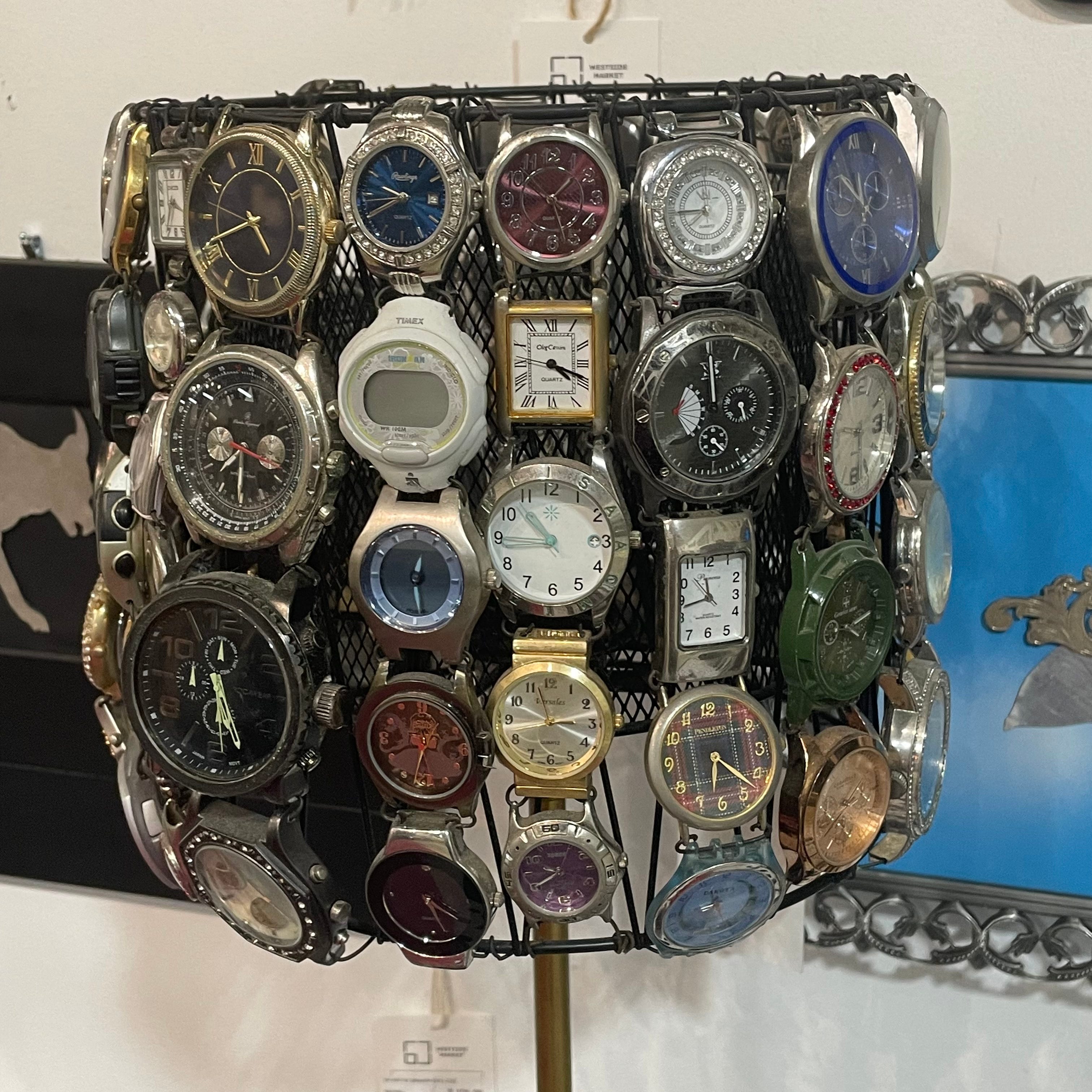
Hmmm…
Spotted this lamp at a local market. I didn’t buy it!
Samhain
The organizers of a recent concert held a brief ritual as we left the hall to celebrate the season of Samhain. They had lit a fire in a small hanging cauldron and provided a bag of fallen leaves. Each of us took a leaf, held it for a moment and thought of a loved one now gone from us, and put the leaf in the flame. In the Celtic calendar, Samhain (pronounced “SOW-in”), is celebrated halfway between the autumn equinox and the winter solstice. It marks the transition between the lighter and darker halves of the year and is a liminal time when the veil between the human and spirit realms is lifted. It is likely the precursor to contemporary Halloween celebrations.
My neighborhood is full of yard decorations at this time of year, and the dead apparently rise to visit us. Here are a few Samhain/Halloween pictures from my morning walks.


Three Meditations on AI
As you probably know, I am both cautious and curious about AI. Today I offer three perspectives.
1. Human Error is the Point
Here is an excerpt from a lovely essay I found about teaching in the age of AI: Human Error Is the Point: On Teaching College During the Rise of AI.
"What A.I. can’t do is feel the shape of silence after someone says something so honest we forget we’re here to learn. What it can’t do is pause mid-sentence because it remembered the smell of its father’s old chair. What it can’t do is sit in a room full of people who are trying—and failing—to make sense of something that maybe can’t be made sense of.
That’s the job of teaching."
2. Exploring Language and Emotion
This one’s not *about* AI. I’m sharing it because I think the content is interesting and valuable, but it’s also an example of how I have used ChatGPT to explore an idea. It started with an interesting feature of the Irish language.
When a Feeling Is On You Rather Than You: How Language Shapes the Temporariness of Emotion
English treats emotions as identity statements: “I am sad,” “I am anxious,” “I am angry.” Grammatically, the feeling collapses into the self. The speaker and the emotional state become indistinguishable. Most speakers don’t consciously experience this as philosophy, but it quietly frames emotion as something inherent to who I am rather than something moving through me.
Other languages handle this very differently, and the result is a radically different relationship to emotional life.
Spanish splits “being” into two modes: ser (enduring essence) and estar (temporary state). Emotions always use estar: estoy triste — “I am (temporarily) in sadness.” The grammar itself encodes impermanence. You are not a sad person, you are a person currently located in sadness.
Irish takes another route: emotions are something upon a person rather than inside them. Tá brón orm translates literally to “sadness is on me.” The speaker is not the source of the emotion; it is more like weather, visiting for a time. There’s a built-in assumption that it will eventually lift.
Slavic languages (like Russian and Polish) often use dative constructions: “to me it is sad” (mnie grustno). The sadness exists in the atmosphere of experience, not in the essence of the self.
Semitic languages (Hebrew and Arabic) sometimes frame emotion as something one has rather than something one is: yesh li pachad — “there is fear to me.” Again, the experiencer is distinct from the state.
In Japanese, emotional states are often expressed as arising or becoming rather than being: the grammar treats feelings as processes that unfold and then pass away.
Across these systems, three metaphors recur:
Emotion as state (Spanish)
Emotion as visitor (Irish / Celtic)
Emotion as unfolding event (Japanese / Buddhist-inflected languages)
Each builds in emotional distance — not avoidance, but perspective.
Modern psychology is rediscovering what these languages never forgot. Affect labeling, cognitive defusion, ACT, mindfulness, and even trauma work rely on the same basic reframing: “I am not the feeling. I am the one experiencing the feeling.”
When someone says “I am anxious,” the nervous system treats that as a statement about the self. When we shift to “anxiety is here” or “anxiety is on me right now,” the nervous system receives a different message: this is passing weather, not identity. Shame drops. Flexibility increases. People move through the state rather than getting stuck as the state.
In other words, grammar is not neutral. It encodes an ontology of emotional life — often long before psychology gets involved.
For English speakers, borrowing these alternative constructions can be a subtle but powerful intervention. Instead of I am overwhelmed, try overwhelm is here. Instead of I am afraid, try fear is moving through me. You are reclaiming the role of experiencer, not embodiment.
The lesson is simple and profound:
When language allows emotion to be temporary, the body more easily believes it can change.
3. Leading into the Age of Wisdom
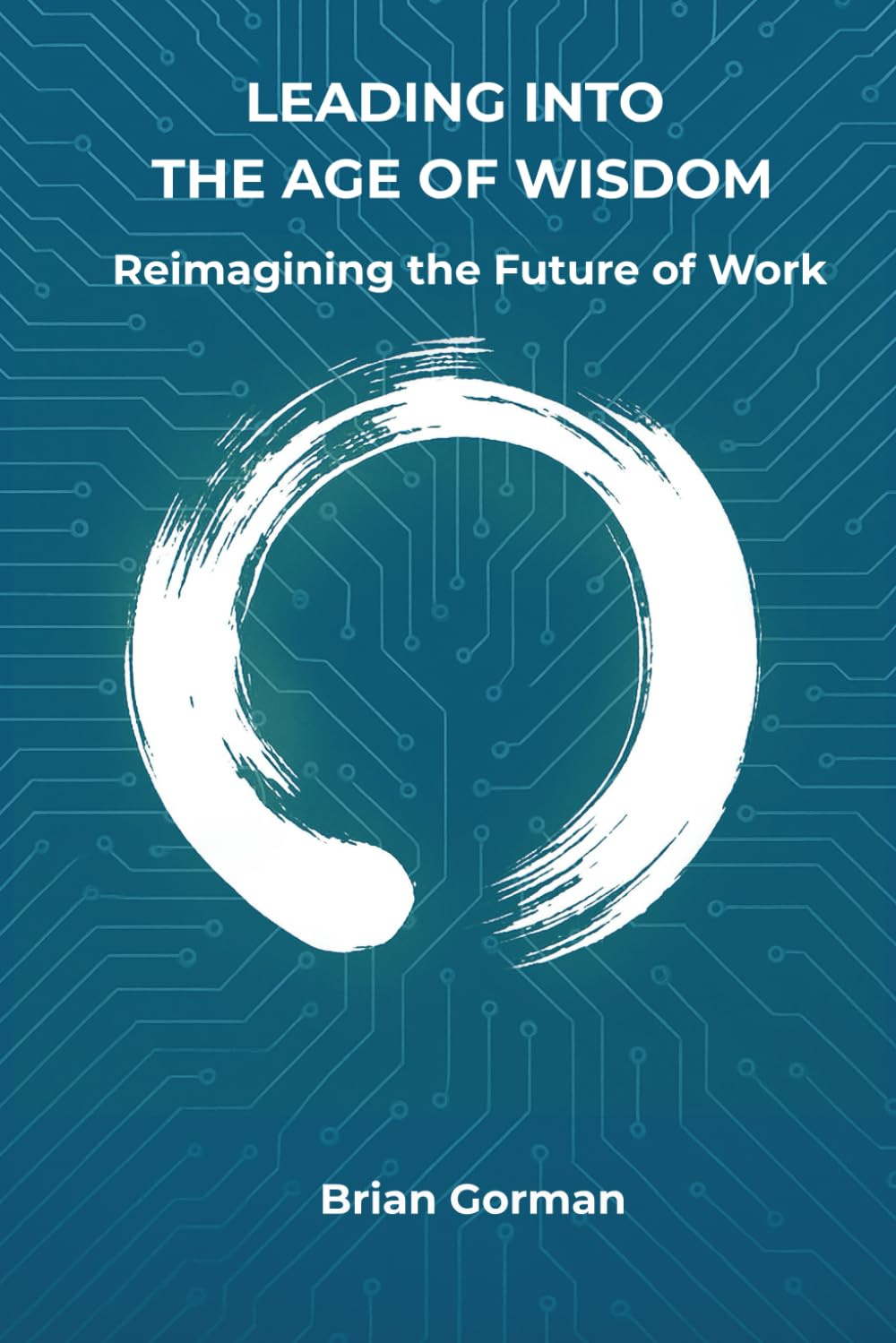
My colleague and friend Brian Gorman recently published a book entitled Leading into the Age of Wisdom: Reimagining the Future of Work which contrasts intelligence and wisdom and provides guidance for bringing uniquely human leadership qualities into reshaping how we live and work. I played a “book fairy” role in helping him navigate the self-publishing process, and also wrote an appendix on how leaders can apply resilience as they explore this terrain.
Crossover
I am working on two family history projects—the journals of my great-grandmother Emma, who started writing in rural Iowa in 1927, and the letters of my great-aunt Katharine, who—among other things—taught school in Tehran before the Iranian Revolution. This week they intersected in the story of this table, which my grandfather (Emma’s son-in-law) made from a platter K brought back from Iran. He turned the legs and built the frame from reclaimed walnut.


Leaving You with a Smile
How can you go wrong with the Muppets and Gene Kelly?
I hope you’ve enjoyed this edition of Downwind Wine! See you in a couple of weeks. In the meantime, please feel free to share, subscribe, and comment.
wow Linda....inspiring, educational, amazing work.....a wonderful read this morning!!!!
What a treat to receive and read today, Linda. Thanks for catching me up on a few things and informing me about new ones altogether. I appreciate you.