
Downwind Wine: Issue #9
Reefing the main, emotional roundness, music, a little synergy, and a unicorn centipede
Rolling Whitecaps and Reefing the Main

The last race of the season was on a blustery Sunday. I was tired, and we were short one crew member. We almost didn’t go out, but decided to give it a shot; if it didn’t feel like fun we’d turn around and come back. We reefed the main—pulling it down part way and tying it at the bottom—to reduce the size of the sail, and off we went.


Although reefing the main sounds like a wimpy move, it’s really not. We’ve found that when the winds are above 12-14 knots, the boat handles better and doesn’t lose speed with a reef—it keeps the wind from overpowering the sail.
We finished second in the race and won the series by one point. We weren’t the fastest boat in the fleet, but we were one of only two boats—out of the eight that competed in the series—that started and finished all four races. And we sailed well, beating the second-place guy by just over a minute in a race that lasted over three hours. I spotted a few life lessons here:
Sometimes success is about showing up consistently and keeping on going.
It’s important to know when and how to reef your sails.
Once the hard work is done, it’s important to celebrate.
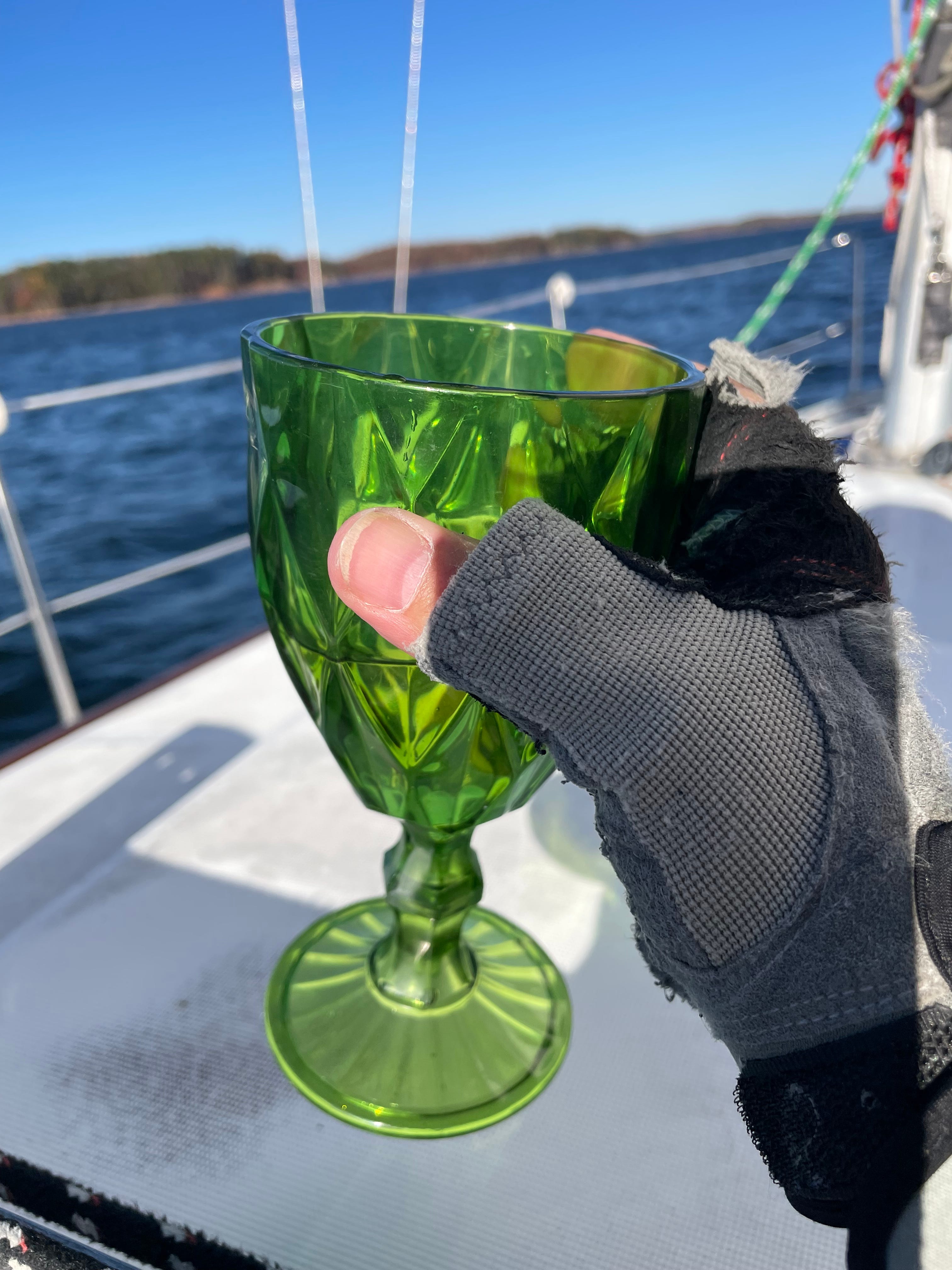
Questions for Reflection: How do you encourage yourself to get out there and keep going when the winds of life are blowing? When do you give yourself permission to “reef the main” to keep yourself from becoming overpowered, and how do you do that? Do you take time to celebrate when you finish a big push, even if you didn’t win the race?
Synergy: Three Levels of Application
As I continue my thinking-out-loud exploration of synergy, I started to write about the next ingredient: interdependence. But I realized there’s another thing I want to focus on first—the range of circumstances in which we might want to strengthen synergy:
Situational—Sometimes we just need a temporary boost in synergy. Even in environments that are relatively stable, there are times where we need to work through a conflict, incorporate a different point of view, or temporarily shift gears to interact more effectively. If we can identify the most important elements for that moment, we can slow down a little and make sure we’re addressing the issue.
Examples: Clarifying a common goal. Making sure everyone has a chance to speak. Getting creative in integrating differing ideas.
Systematic—Sometimes we need to gear up for a project where strong collaboration is important from beginning to end. Taking time to lay the groundwork through kickoff meetings, preliminary discussions, and other structured activities can get us off to a good start. A facilitator who’s not a team member can sometimes be helpful here.
Examples: Planning a family reunion. Starting a new marketing campaign for a business. Assembling a sports team for a season of competition.
Sustainable—Sometimes we build partnerships that need to last over time. When people will be working together for extended periods of complexity and challenge, we can build effective synergy principles and practices into the ongoing operations of the system. This involves making sure people understand the core principles of synergy and do periodic work to develop skills, monitor effectiveness, and continually improve their collaboration.
Examples: Building a leadership team for the long-term. Beginning a marriage or other committed relationship. Establishing the board of a nonprofit organization.
Questions for Reflection: Can you think of a current situation that could benefit from a “shot” of synergy? How might you orchestrate that? Are you working on a collaborative effort with others right now? What steps have you taken to lay the foundation for synergy? If you are in a long-term work or personal relationship, what have you done to build sustainable synergy, and what might you do to strengthen and improve the quality of your collaboration?
Everyday Beauty
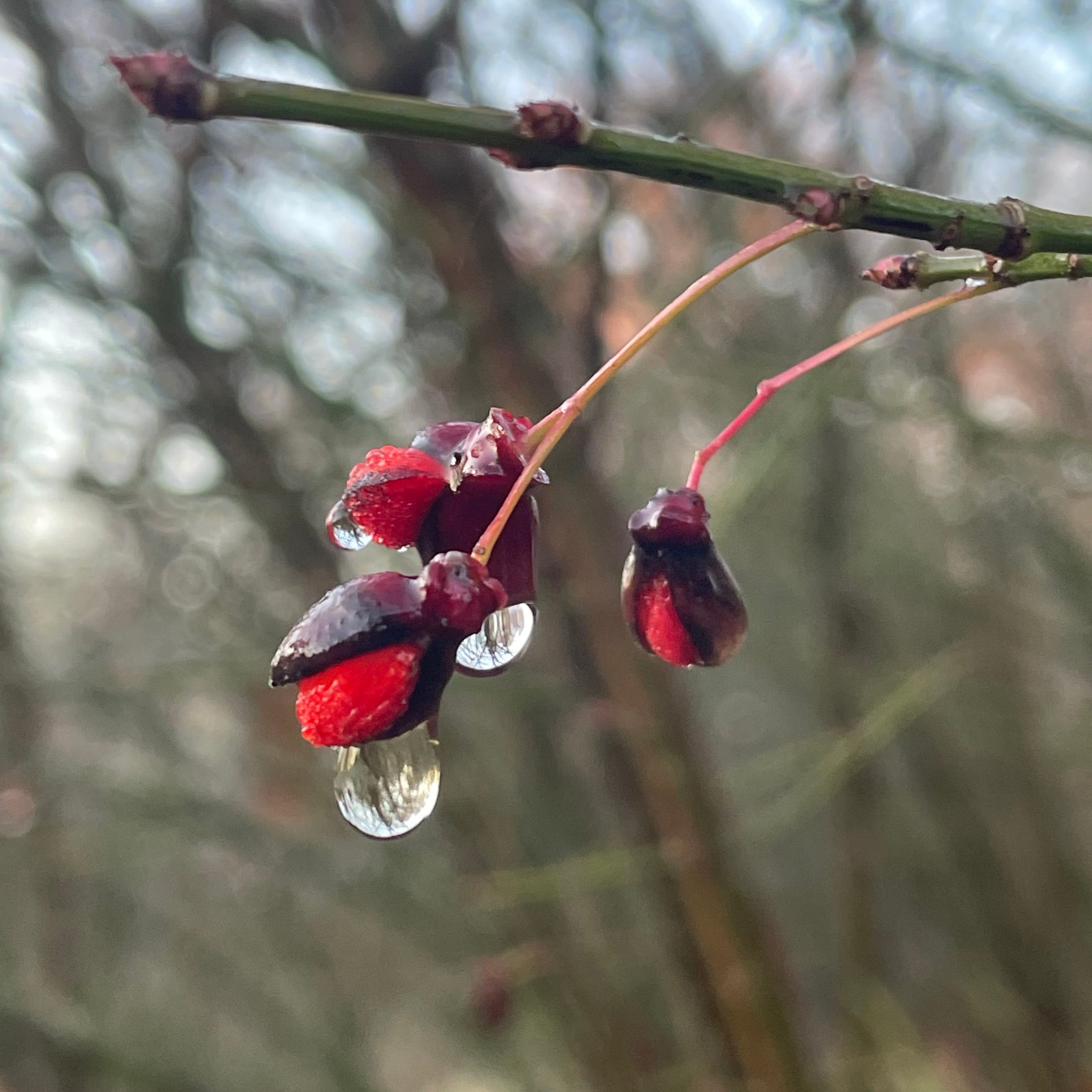
Six Statements for Emotional Roundness
John Calvi is a Quaker healer and massage therapist who has a gift for helping people release physical and emotional pain. A number of years ago I ran across an article he wrote in Friends Journal that has stayed with me. It focuses on paying attention to our “emotional repertoire.” He presents six healing sayings that, he says, “comprise all the really important messages one person gives another.” He goes on to say that “the absence of any one of them denotes a numbness or starvation which deserves urgent attention,” and that “the stretch that one has to make to use these six sayings is one of the most elemental moves possible to counter the tendency to contract that comes after a traumatic experience.”
Here are the six statements, and my brief summary of the important feelings they express. I encourage you to read the full article if you’d like to dig deeper.
“I love you.” Joy, trust, power, and vulnerability all together.
“Thank you.” Receiving, appreciation, acknowledgement of interdependence.
“I’m sorry.” Humility; starting point for conflict resolution.
“I need help.” Asking that emotional needs be met.
“That’s not good enough.” Stating power, need, and self-value.
“No! Stop! Bug off!” Making space, setting boundaries, expressing anger.
He suggests some exercises to explore using one or more of the phrases more often—they focus on being playful and paying attention. “If you get a chance, work on this exercise with someone else who is also eager to expand. Have a dinner where you try to use all six saying with one another: ‘Mom, please pass the peas and bug off.’ ‘Certainly, dear, and that’s not good enough.’”
Questions for Reflection: Which of these are easiest for you to say? Most difficult? Are there some you use frequently, or never? Does the pattern remain constant regardless of who you’re with, or does it change? What might you do to create greater range and roundness in your emotional repertoire?
Benefit for Ukraine
I recently went to a concert by long-time folk musician John McCutcheon to benefit kids on the war front in Ukraine through nonprofit organization helpingukraine.us. Here’s a short clip of him playing/singing Woody Guthrie’s “Pastures of Plenty” that shows the power of his artistry.
I also learned a little bit about Ukrainian folk music, including an instrument I’d never even heard of before—the bandura, which is deeply intertwined with Ukrainian national identity and a symbol of the struggle for freedom and independence. Here’s a snippet of Olena Kovban playing this instrument.
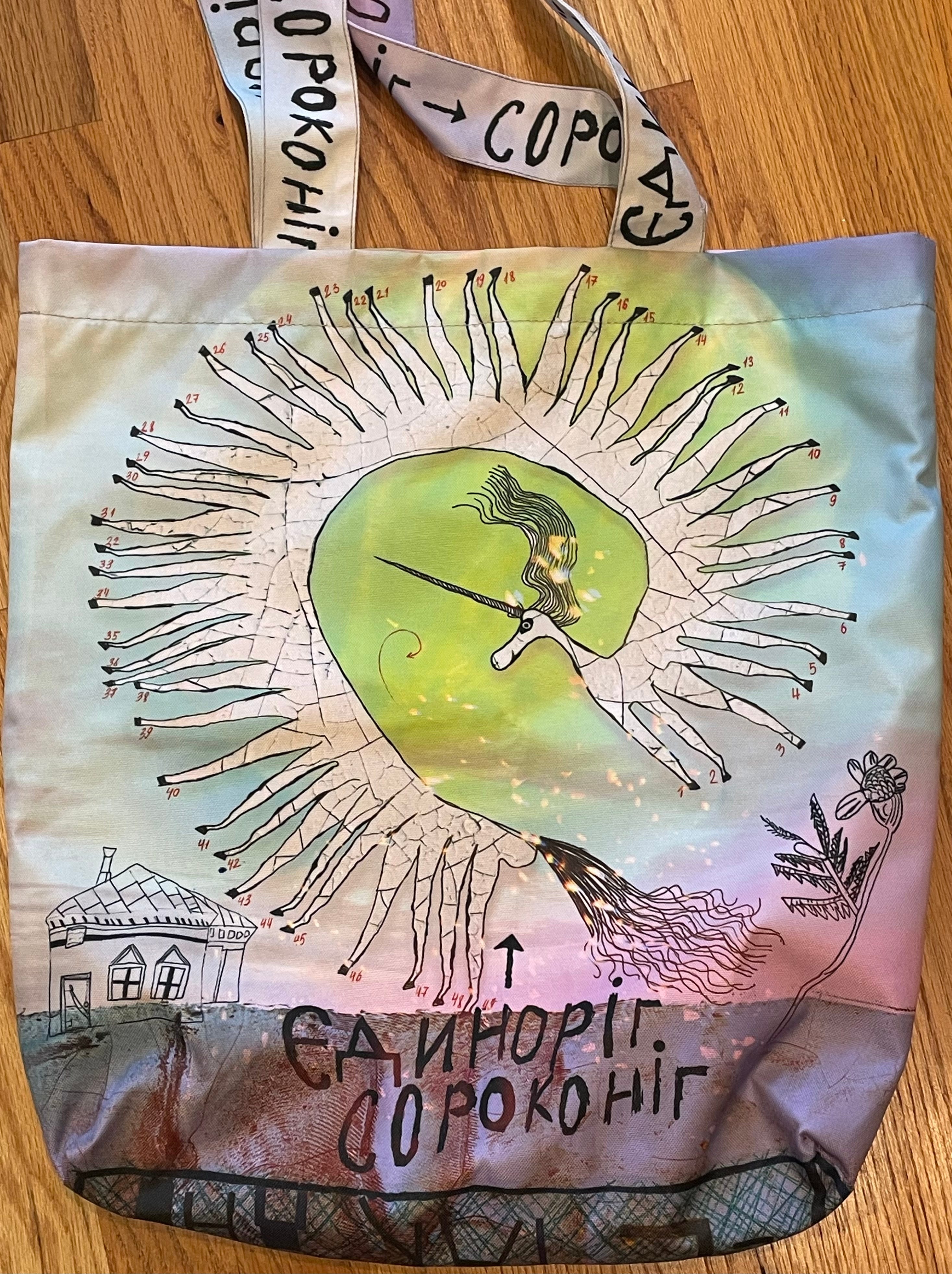
They also featured artwork created in underground shelters by children from an art studio in Kharkiv. I couldn’t resist this tote bag, which features a “unicorn centipede.”
I hope you’ve enjoyed this edition of Downwind Wine! See you in a couple of weeks. In the meantime, please feel free to share, subscribe, and comment.